Engineering services

Johns Manville Services That De-Risk Thermal Specs

Application engineers guide architects, procurement managers, and mechanical contractors from R-value calculations through roofing stack verification so insulation and membrane details survive mock-ups and inspections. Support covers thermal conductivity tables, compressive strength grades at roof traffic zones, fire resistance rating mapping, and moisture vapor transmission checks—not a sales walkthrough of every SKU.

We document trade-offs when domestic board availability lags import facings, when prefabricated sandwich panels need different dimensional stability data than site-installed batts, and when aesthetics-driven cladding thickness fights continuous-insulation R-value targets. Limitations are written into the note: JM does not stamp PE structural calculations, does not substitute for AHJ plan review, and will not claim a warranty path on untrained applicator crews.

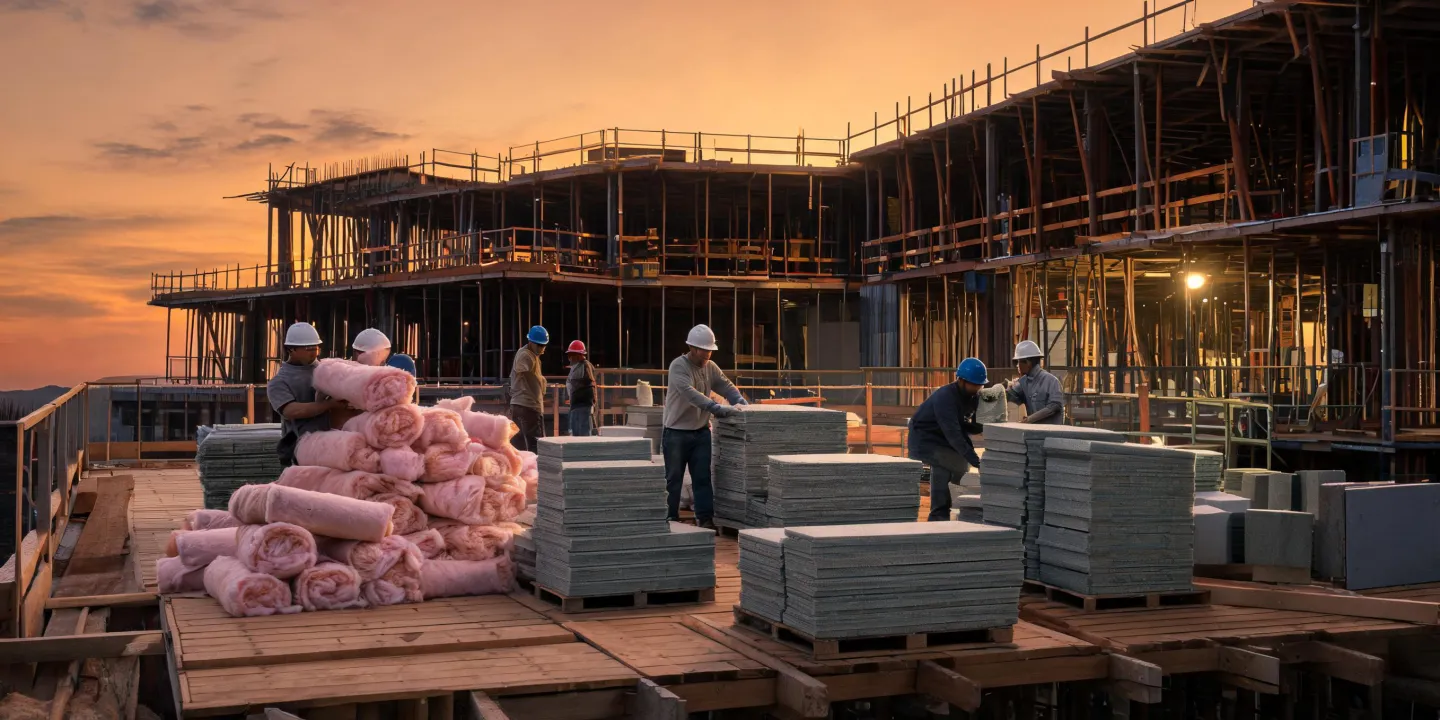
Engineer reviewing insulation TDS on a commercial roof deck

Service pillars

Support Across Design, Submittal, and Field

Thermal Calculation Reviews

We align published R-values and thermal conductivity with your climate zone, continuous insulation thickness, and ASHRAE path so energy models and Division 07 language match. Thermal bridging at slab edges, parapets, and mullions is called out when the model still assumes unbroken CI. Air permeability targets from blower-door or envelope consultants are paired with facing and tape systems when provided.

Roofing Assembly Selection

Wind-load ratings, cover-board choices, and membrane compatibility are packaged for low-slope decks before shop drawings freeze the stack. Polyiso compressive strength classes (typically 16–25 psi for commercial traffic grades) and cover-board impact resistance are matched to rooftop equipment paths. UV stability of exposed temporary insulation during phased installs is noted when membranes lag schedule.

Fire-Rated Assembly Mapping

UL and FM listed assemblies for mineral wool partitions and roofing systems are cross-checked against your fire resistance rating schedule. Two-hour partition listings and Class A roof assemblies are common requests; we refuse to invent listing IDs when the wall type is not in the published catalog and instead propose tested alternates.

Field Installation Coaching

Crews learn facing orientation, compression limits, and membrane welding windows that protect moisture vapor transmission assumptions. Water absorption rate risks on wet decks, dimensional stability after rain delays, and service life expectancy differences between faced batts and closed-cell boards are covered in the same visit when the stack mixes product families.

Certified Contractor Network

Project teams receive contractor referrals trained on JM roofing warranties and insulation fastening patterns for the local market. Referrals favor crews with documented fastening audits; we disclose when a market has limited trained capacity rather than stating next-day crew availability as a default.

Impact metrics

How Specification Support Shows Up on Schedules

48h

Typical data-package turnaround

R-value tables and assembly notes returned for active bid packages.

92%

Initial-pass submittal acceptance

Projects using JM review notes before the opening mechanical/architectural submittal cycle.

1,200+

Annual field coaching visits

Jobsite sessions covering batts, polyiso, and single-ply sequencing.

40+

Markets with warranty support

Roofing warranty pathways backed by trained applicator networks.

Bring Your Assembly Questions to the Technical Desk

Share climate zone, deck type, fire resistance rating, and whether aesthetics or thermal performance currently drives the wall and roof stack. Prefabrication versus traditional cavity fills is a common trade-off we document with both sides of the schedule argument.

Request Technical Data Sheet