
Industry applications

Johns Manville Insulation Across Building Segments

From commercial towers to cold-storage envelopes, JM assemblies are mapped to the thermal, fire, and acoustic criteria each segment actually inspects—not generic “building materials” claims. Each segment below lists the binding specs we see most often: R-value, fire resistance rating, STC rating, compressive strength, and moisture vapor transmission—plus where green-premium recycled content conflicts with budget mineral wool.

Domestic board mills and import-facing lines both appear in North American packages; lead-time notes belong in the bid set, not in a late VE memo. Prefabricated panel plants and traditional stick-framed cavities need different dimensional stability and fastening data—mixing those playbooks without a coordination note is a common inspection fail.

Segments Where Thermal Details Decide Schedule

Commercial office curtain wall insulation detailing

Commercial Construction

Continuous insulation boards, acoustic mineral wool, and low-slope roofing stacks for offices, schools, and mixed-use cores where ASHRAE paths and occupancy schedules collide. Typical asks: polyiso near R-6.0/inch class, mineral wool partitions to 1–2 hr fire resistance rating, and STC rating packages for demising walls. Thermal bridging at slab edges is flagged when cladding aesthetics push CI thinner than the energy model assumes.


Industrial process piping with insulation

Industrial Facilities

Pipe, equipment, and vessel insulation selected for service temperature, compressive strength at hangers, and maintenance access—not residential batt shortcuts. Thermal conductivity tables and jacket UV stability matter on outdoor runs; water absorption rate after washdowns is called out for food and process plants. We disclose when high-temperature service exceeds published facing limits instead of stretching a general-purpose batt.

Residential framing with insulation install

Residential Building

Batt, blown-in, and rigid options sized to stud depth and climate zone so builders hit IRC energy code without over-ordering specialty foams. VOC emissions and recycled content percentage data are supplied when green-program housing requires them; budget tracts often stay on code-minimum fiberglass with clear air-permeability taping notes rather than premium CI boards.

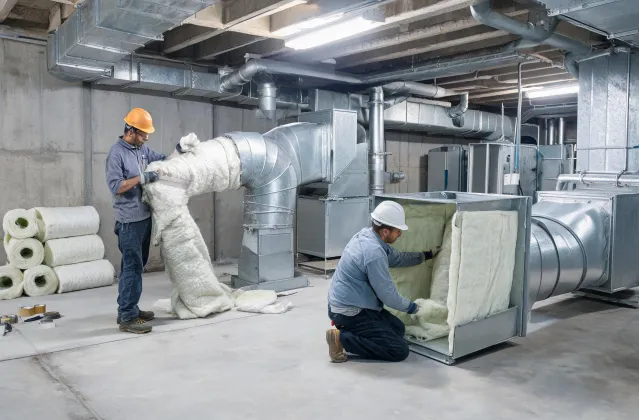
Mechanical room duct insulation

HVAC & Mechanical Systems

Duct wrap, duct liner, and pipe insulation that protect supply-air temperature and reduce condensation risk at unconditioned shafts. Moisture vapor transmission and facing seal continuity decide whether liner or wrap is appropriate; STC rating goals in occupied ceilings may favor denser liners with trade-offs in thermal conductivity. Service life expectancy notes cover jacket abuse in mechanical rooms.

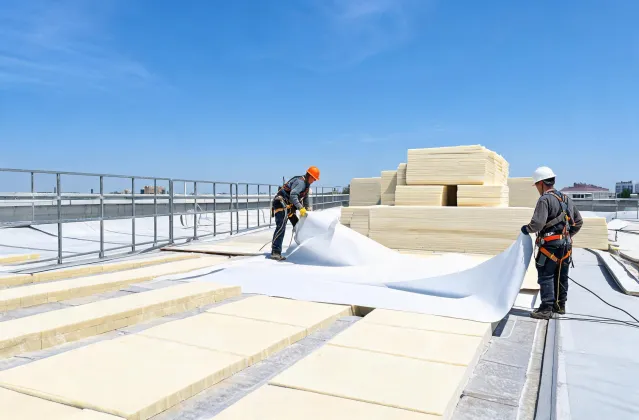
Commercial TPO roofing installation

Roofing & Waterproofing

Single-ply membranes over insulation and cover boards with wind-load listings and warranty pathways for low-slope commercial decks. Compressive strength under pavers and equipment curbs, cover-board impact resistance, and temporary UV exposure during phased membrane work are documented. Prefab roof panel plants versus stick-built decks need different fastening patterns—state the delivery path early.

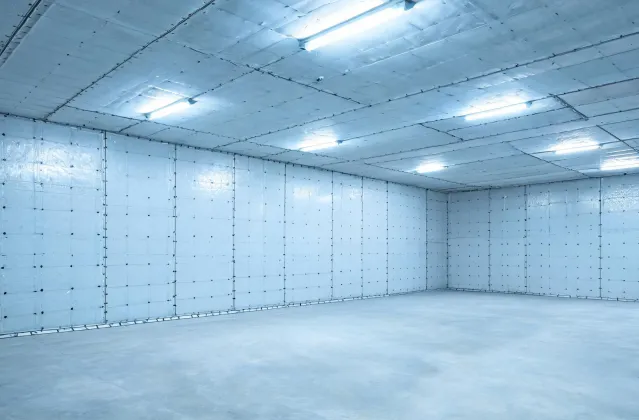
Cold storage insulated warehouse

Cold Storage & Process Piping

Low-temperature envelopes and process piping where vapor drive, R-value, and jacketing durability decide whether frost forms on the wrong side of the barrier. Dimensional stability at freezer setpoints and air permeability at door frames are common fail points. Embodied carbon requests are handled with published recycled content data—we do not invent EPDs for assemblies not yet tested as a system.

6 Primary segments supported
R-6.0 Peak polyiso R/inch class
2-hr Common partition listings
STC Acoustic wall & duct options

Match Your Segment to a Thermal Package

Tell us occupancy type, climate zone, and whether fire resistance rating or R-value is the binding constraint. We return product shortlists with ASTM references—not a one-size catalog dump. When air permeability targets or embodied carbon limits appear in the owner’s brief, note them so we can pair vapor-retarder facings and recycled content percentage data with the thermal stack instead of forcing a late substitution.

Find a Certified Contractor